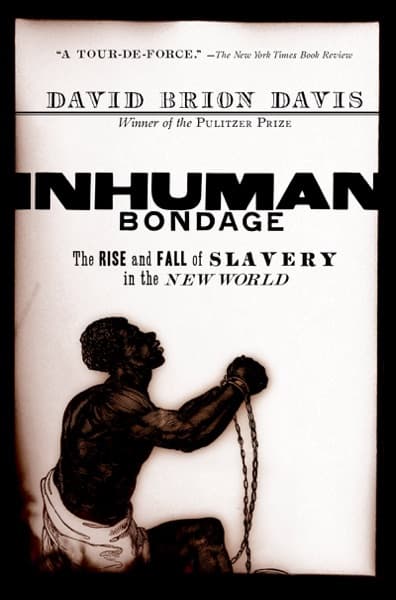
“in human bondage a historian of slavery david breon davis puts it this way to give you a sense of i mean if this is a pandora's box of of um bad things that can happen to you what exactly are…”
Why: It provides deep historical context and statistics on the catastrophic population collapse and the mechanics of the slave trade.
“and my thanks to brenda e. stevenson, the historian who wrote what is slavery, where she reminds us that the trauma that is slavery starts much earlier in the process…”
Why: It highlights the profound psychological and physical trauma of the earliest stages of the slave trade.
“there are some there's a book i picked up because uh brenda stevenson was quoting from it called pioneers of the black atlantic which is uh several different slave narratives…”
Why: It offers firsthand perspectives of individuals who experienced the horrors of the transatlantic slave trade.
“In his book, Slavery, A World History, Milton Meltzer describes as sort of a typical slave market sale and says that sometimes the affairs were done privately with an advanced sale…”
Why: It vividly details the harsh reality of human auctions and the psychological terror inflicted on enslaved people.
“i was reading a book called how the word is passed by clint smith and it's about sort of the legacies of american slavery that he can see when he travels…”
Why: It connects historical sites and public memory to the ongoing legacy of slavery in America.
“What's fascinating about Jefferson is that this is a flaw of which he was wholly cognizant. In Notes on the State of Virginia, he wrote, quote, these are Jefferson's words, There must doubtless be an unhappy influence on the manners of our people produced by the…”
Why: It reveals how a prominent American founder recognized the corrosive moral impact of slavery on society.
“and it's written by a professor at North Carolina. I believe he was, William Sumner Jenkins. And the book is called Pro-Slavery Thought in the Old South.”
Why: It outlines the ideological clash and early arguments surrounding slavery in the newly formed American government.
“author jeremy d popkin in his book facing racial revolution which is a book of primary sources so he's reading the mail of these people in sandeming during this era that we're about to get into…”
Why: It provides primary source insight into the deeply entrenched racial prejudices that fueled the Haitian Revolution.